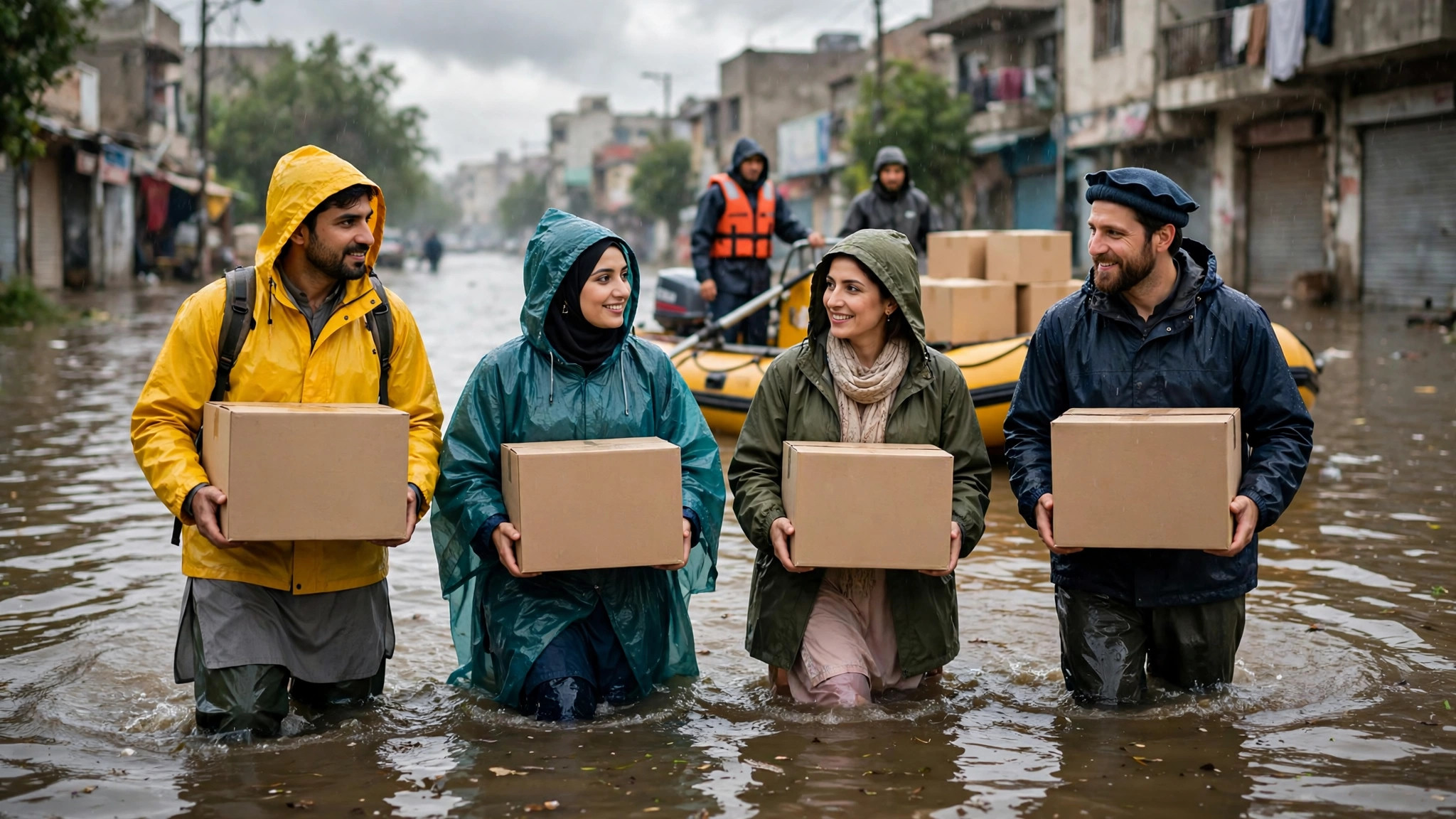
Emergency flood relief Karachi families can count on starts fast. It does not take long. A few hours of heavy monsoon rain and the streets are under water. Homes in low-lying neighbourhoods flood. Families lose their food, their clean drinking water, the few things they own. And for a daily-wage worker, the blow lands twice: no work that day means no money, right when his family needs it most. In those first hours, a promise of help later is no use. What a family needs is food, water and a dry place to sleep, right now. That is what the Karachi People Welfare Association (KPWA) prepares for all year, so that when the rain comes, our teams can move fast. That is what flood relief Karachi means to us.
Why Floods Hit Karachi So Hard
Karachi is a coastal city of more than twenty million people. Its drains were never built for the kind of rain the monsoon now brings. In many low-income settlements, houses stand close to open drains and seasonal water channels. One night of heavy rain can flood a whole street. The water that comes in is not clean. It spreads diarrhoea, skin infections and other waterborne illnesses, and children and older people fall sick first. Then the power goes. Roads block. Shops shut. A family cannot buy food or reach a clinic. A well-organised response in those conditions can save lives. A slow one can turn a difficult week into a disaster that lasts for months. Flood relief Karachi programmes have to be ready before the rain arrives. After it is too late.
How KPWA Emergency Relief Operations Work
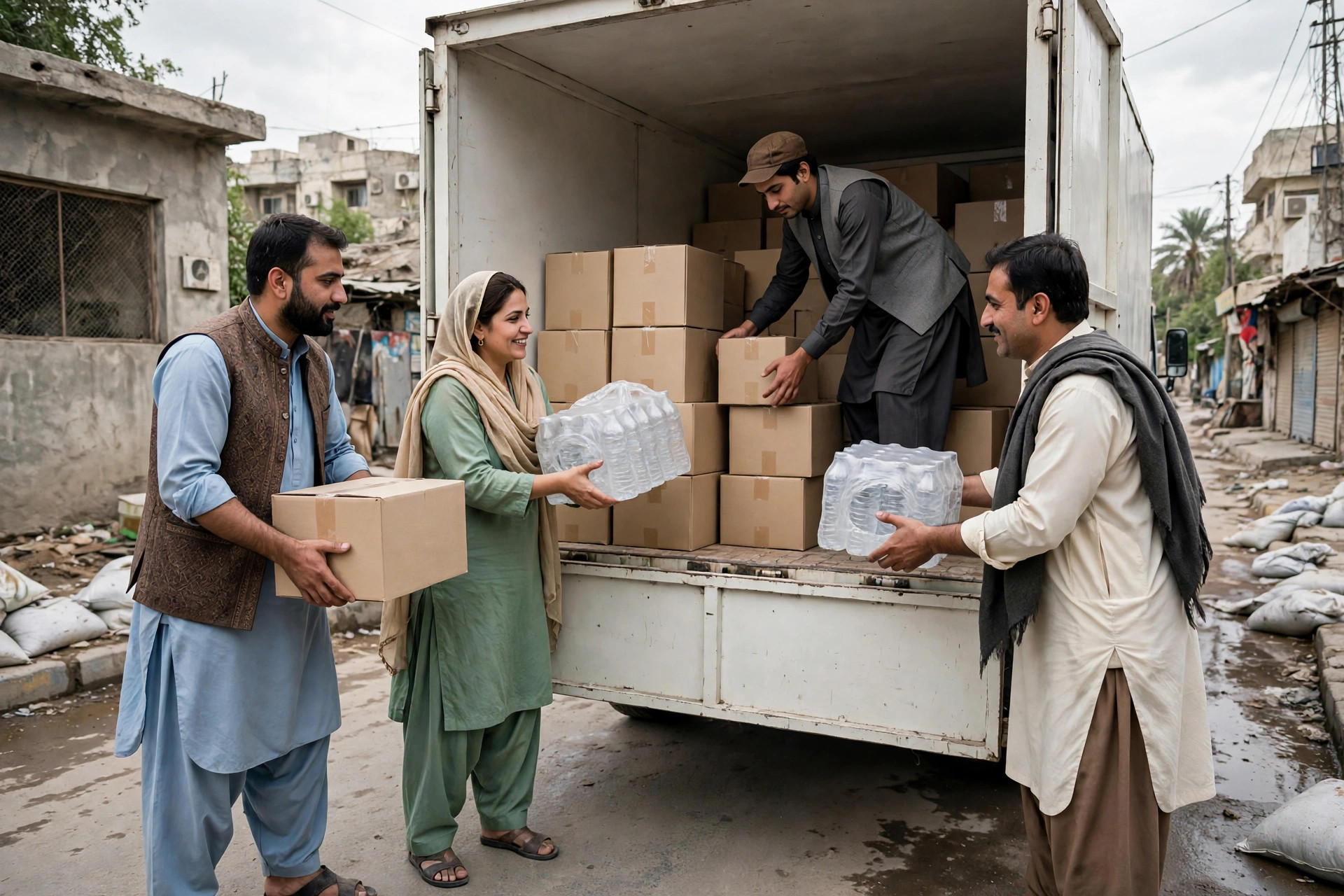
When floods hit Karachi and other parts of Sindh, our emergency team moves within hours. That is only possible because the work starts before the rain. Our volunteers and local contacts know the neighbourhoods. They tell us which areas are hit hardest, so help goes where the need is greatest, not where it is easiest to reach. I have seen need outrun supply before. In Ramadan 2026 we had 250 ration bags ready and more than 1,000 people turned up: old men and women, mothers, men with no work. I stood there wondering how 250 bags could stretch that far. Then more donors came forward, we made more bags, and nobody went home empty-handed. Flood relief works the same way. The need is always bigger than what is on the truck, and it is donors who close the gap. We deliver relief kits with food, clean drinking water and hygiene essentials. Enough to carry a family through the first 72 hours. Our teams work from our base at Korangi Crossing, Allah Wala Town, Karachi. More than 50 volunteers pack the supplies, load the vehicles and carry kits through flooded streets to families who cannot reach a distribution point themselves. If you want to donate flood relief Karachi families can rely on, your gift goes into these kits, and into the transport that gets them there.
Shelter and Medical Care in Relief Camps
Food alone is not enough. So our teams also set up temporary relief camps with medical care and safe shelter. Volunteer doctors treat waterborne illnesses and injuries from the flood. Children, pregnant women and older people are seen first. For a displaced family, a camp is a dry place to sleep while the water goes down, and a place to start thinking about what comes next. Clean water. Dry bedding. A safe place to sleep. A doctor who will listen. These sound like small things. To a family that spent the night standing in flood water, they are everything. That is what good flood relief Karachi work is measured by, not the number of kits handed out.
Long-Term Rehabilitation After the Floods
Our work does not end when the headlines fade. Once the water is gone, families still face a ruined home and no income. So KPWA stays. We help rebuild damaged homes. We help farming families who lost everything get back on their feet, with tools, seeds and livestock. A relief kit helps a family survive the week. Help to rebuild a home and restart an income helps them survive the year. Donors who choose flood relief Karachi programmes with a rehabilitation plan are giving families a future, not just a week of food. That longer view runs through everything KPWA does, from healthcare and education to food security.
Your support is what makes this response possible. If you want to help flood victims in Karachi who are still rebuilding, please donate to KPWA or contact our team to offer food, supplies or your time as a volunteer. You can also read about our Clean Drinking Water Projects in Karachi and our Ration Distribution in Karachi, which support the same families between floods, or learn more about our wider work on the About Us page. Together, we can answer faster, and stronger, every time Karachi faces a crisis like this.
Read more: Clean Drinking Water Projects in Karachi • Ration Distribution in Karachi • Winter Clothing Drive in Karachi
Frequently Asked Questions
How can I donate flood relief in Karachi through KPWA?
You can donate through the KPWA donate page, or email us at wealthspringusa5555@gmail.com for guidance on donating money, food, or supplies.
What is included in a KPWA flood relief kit?
A KPWA relief kit contains food, clean drinking water, and hygiene essentials for a family in the first critical days after a flood. Where needed, our teams also provide shelter support and access to medical care at temporary relief camps.
How quickly does KPWA respond to a flood emergency?
KPWA aims to mobilise within hours of a flood emergency. Our volunteers and local contacts identify the hardest-hit areas first, so that food, water, and medical help reach the families who need them most during the critical first 72 hours.
Does KPWA help families after the flood water recedes?
Yes. KPWA supports long-term rehabilitation, including help rebuilding damaged homes and restoring livelihoods. This can include tools, seeds, and livestock for farming families who lost everything, so they can rebuild with dignity.
Help Us Do More
Your donation directly funds this work — healthcare, education and food security for families across Karachi.
Donate Now