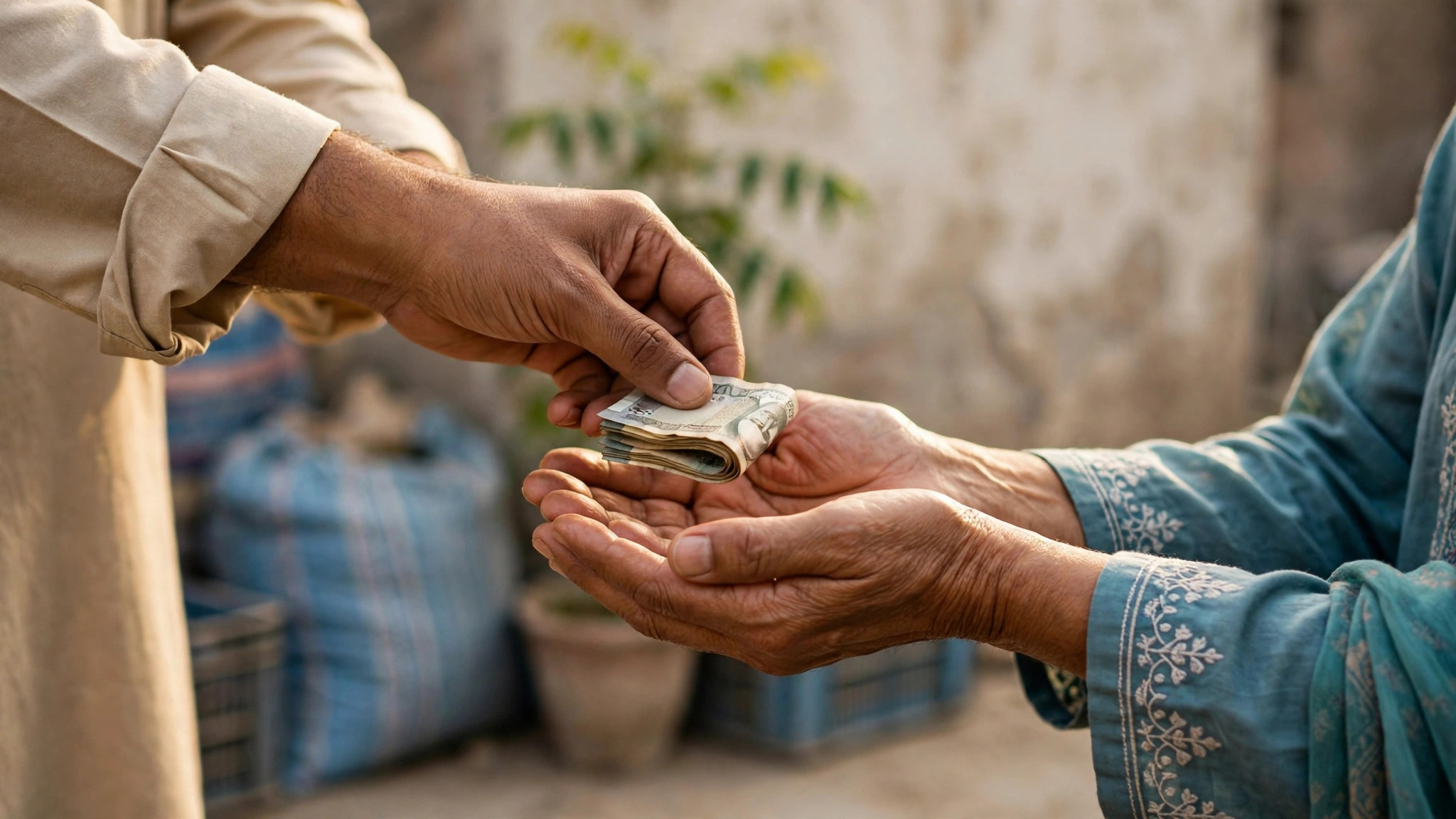
When I joined the Karachi People Welfare Association, people started coming to me with their problems. A man told me there was no food at home and no one in the family earning. A mother said her children had not eaten properly for days. A sick man explained that he could not buy his medicine. During Ramadan, I learned that some families broke their fast with only a glass of water, because there was nothing to eat in the house. I went home that evening in tears. I had to do something for these people.
In Karachi, Zakat is not an abstract idea. It is the food on a family's table, the medicine in a sick man's hand, and the school fee that keeps a child in class. This is what faith-based giving looks like when a community puts it into practice.
That is Zakat in action. Zakat is more than a duty. Through organised community work, it becomes food, medicine and schooling for families who need it most. The Karachi People Welfare Association (KPWA) shows how that works in practice.
What Is Zakat and Why Does It Matter?
Zakat is one of the Five Pillars of Islam. It is an obligation for Muslims who meet the financial conditions. Not a favour, and not optional.
In most common cases, eligible Muslims give 2.5% of qualifying accumulated wealth. The exact calculation depends on the type of assets and the Islamic rules that apply to them.
It also reminds us that wealth comes with responsibilities. Helping others should not be an occasional gesture.
Zakat supports:
- Compassion for people living in poverty.
- Financial help for those entitled to receive it.
- A stronger sense of social responsibility.
- Closer ties between neighbours.
- A habit of generosity and mutual support.
How KPWA Turns Community Giving Into Practical Support
The Karachi People Welfare Association (KPWA) supports people through community welfare work: not grand promises, but practical help, delivered by people who know the neighbourhoods they serve.
The principle behind it is simple: support should reach people in ways they can actually use. So far, KPWA has distributed 5,000+ meals, supported 500+ students, helped 1,000+ patients, and works with 50+ volunteers.
1. Food and Ramadan Ration Distribution
Food comes first, because hunger does not wait. Many low-income households struggle with grocery costs, and when prices rise, the strain gets worse. Ramadan adds more pressure for families who are already stretched. That is when ration distribution matters most: essential food items, delivered to deserving households, taking some of the weight off a family's shoulders so they can focus on everything else. It is also the spirit of Ramadan itself: generosity, patience, and care for others.
I saw that clearly in Ramadan 2026. We had prepared 250 ration bags. Then more than 1,000 needy people arrived: elderly men and women, mothers, and jobless men and women. I stood there wondering how 250 bags could possibly be shared among more than 1,000 people. We were in real difficulty. Then more donors came forward with funds, we prepared more bags, and in the end everyone who came received one.
Food assistance is more than a donation. It is a way of telling a family they are not alone.
2. Free Medical and Eye Camps
Healthcare costs stop people getting help in time. Some delay a checkup because they cannot afford the consultation, the medicine, or even the transport. A small problem, left alone, becomes a serious one. Free medical camps take that barrier away. KPWA organises free medical and eye camps for local residents, giving people a chance to be seen, examined and guided. Eye camps matter a great deal, because poor vision affects schooling, work, and everyday life. An early checkup can catch a problem before it does real damage, and where free medicines are available, patients leave with more than advice.
3. Medicines for People in Need
For someone living with a health condition, medicine is not optional. It is a necessity. Yet some families have to choose between buying medicine and paying for something else the household needs. Community help can take that choice away. Providing essential medicines is one of the most practical things welfare can do. It protects a person's health.
4. Education and Opportunities for Children
Education is one of the strongest ways to change a family's future. But when money is short, children are often the first to feel it: school supplies, uniforms, transport, all of it adds up. Some children drop out, not because they want to, but because their parents cannot stretch any further. Community support can keep them in class. Help with those costs gives a child a better chance to keep learning, and to work toward a more secure future.
Why Community Participation Makes Welfare Stronger
A welfare organisation cannot do this work alone. It needs people willing to give their time, their skills, their resources and their experience. Volunteers organise activities, spot the families who might otherwise go unnoticed, hand out assistance, and connect people with the support available. Donors make the money possible. Local residents know who needs help most.
But good intentions are not enough on their own. Donors should know how their money is used. Organisations should keep proper records, follow clear procedures, and make sure help reaches the people entitled to it. Trust grows when people can see that contributions are handled responsibly.
One thing we are proud of: we have helped many people, but we never turned their hardship into publicity. No photographs, no social media posts about them. Our purpose was to end people's troubles, not to advertise ourselves. That, I believe, is why donors continue to trust us.
And we do not help Muslims alone. Hunger is the same for everyone. A small child is a small child, Muslim or Christian. We support many Christian families too, with ration and whatever we can provide.
What US-Based Fundraisers Can Learn From Community Giving
Community welfare work in Karachi has lessons for nonprofits and fundraisers in the United States too. The needs are different. The principles travel well.
Build Trust Through Transparency
People give more willingly when they understand where donations go and what they achieve. Fundraisers should say plainly what the money supports, and how results are measured.
Focus on Real Community Needs
Good fundraising starts with listening. Find out what a community actually struggles with before planning a project. In one neighbourhood, food may be the biggest need. In another, it may be healthcare, education or emergency support.
Encourage Consistent Giving
Big donations can fund big projects. Smaller, regular gifts build something just as important: a support system people can rely on month after month.
Share Results Responsibly
Donors deserve to know what their giving achieved. Share updates: activity reports, feedback, financial summaries. And protect people's privacy while you do it.
Make Volunteering Part of the Mission
Money matters, but so do people. Volunteers bring professional skills, organise events, help with distribution and spread the word.
The Importance of Responsible Zakat Distribution
Collecting donations is only half the work. How they are handed out matters just as much. Zakat must go to the people Islam says are entitled to receive it, and Zakat funds must be kept separate from other donations when the rules require it. Beneficiaries should be assessed respectfully. People receiving help deserve dignity and privacy. Their circumstances should never become a source of embarrassment, or a photo opportunity.
Responsible distribution requires:
- Clear eligibility guidelines.
- Proper financial records.
- Careful assessment of genuine need.
- Respectful treatment of beneficiaries.
- Regular reporting to donors.
- Compliance with Islamic principles.
These practices protect the purpose of Zakat, and they strengthen public confidence.
How You Can Become Part of Positive Change
You do not need to be wealthy to make a difference. A contribution of any size can help someone through a difficult week. There are several ways to take part:
- Give Zakat or voluntary charity through a trusted organisation: see how to donate Zakat in Karachi.
- Support food and Ramadan ration distribution: read how ration distribution works in Karachi.
- Help provide essential medicines.
- Take part in free medical and eye camps.
- Donate useful household items.
- Volunteer your time and professional skills: read how volunteering in Karachi works at KPWA.
- Encourage friends and family to support responsible welfare work.
Before you donate, look into the organisation: its mission, its activities, its financial practices, and how it handles donations. Choose a cause that reflects your values, and give with your eyes open.
Turning Generosity Into Lasting Impact
Zakat reminds us that caring for others is a responsibility, not an extra. Its value shows when giving reaches the people who need it: a food package on a struggling family's table, medical help without the worry of cost, a child staying in school for another year. On their own, those are small acts.
The Karachi People Welfare Association continues that work through ration distribution, medical camps, eye camps, medicines and essential assistance. But it only works when people take part. Give, volunteer, or simply spread the word. Every month, we need donations, so no child in any home dies of hunger, and no elderly person suffers because they cannot afford medicine.
Because Zakat is not only about giving. It is about making a difference in someone's life.
Learn more about Karachi People Welfare Association: www.kpwa.site
Read more: Donate Zakat in Karachi: Give Zakat That Reaches Families • Donate to Charity in Karachi: How Your Donation Helps • Volunteering in Karachi: Join KPWA Volunteers
Frequently Asked Questions
1. What is Zakat in Islam?
Zakat is an obligatory form of charity and one of the Five Pillars of Islam. Eligible Muslims give a portion of their qualifying wealth to support people entitled to receive it.
2. How much Zakat should a Muslim pay?
In many common circumstances, the rate is 2.5% of qualifying wealth. The exact calculation depends on the assets involved and applicable Islamic rules.
3. Who can receive Zakat?
The Quran identifies eight categories of eligible Zakat recipients. These include the poor, the needy, and other specified categories.
4. How can community organizations help distribute Zakat?
Organizations can assess eligible needs, organize assistance, maintain financial records, and distribute funds responsibly according to Islamic principles.
5. How can I support KPWA welfare activities?
You can explore KPWA's welfare initiatives, contact the organization at wealthspringusa5555@gmail.com, volunteer, or contribute through its verified donation channels.
Give Your Zakat Today
Your donation directly funds this work — healthcare, education and food security for families across Karachi.
Donate Now